Sim Study Notes
EFATO Procedure
| PF: | PNF: |
|---|---|
| Attitude, ball, HDG (SCAN FLOW) | |
| "Positive rate, gear up, max power" Maintain V2 - V2+10 |
Check positive, gear up, CTOT, both FD “Selected, max power set, 1⁄2 bank on” |
| "Yaw damper" | "Selected" |
| "Heading bug 2 degrees live, roll trim live" | |
| "Autopilot on" | |
| [Identify master warnings, master cautions] | |
| [PAN CALL] | |
| Acceleration alt (ALT -> IAS) | "Flap at zero, enroute ....." |
| Identify Failure | |
| Memory Items | |
| Check Performance Speed, track, time, temp, transmit, terrain |
|
| Check Circuit Breakers | |
| ECCL |
Go-Around Procedures
| PF: | PNF: |
|---|---|
| "Going around" Double click, 80%, 6.4° |
Flap 7, set power, gear up, YD, FD "Flap 7 selected, power set, gear selected up, yaw damper on, 1/2 bank off" |
| VENR +10 call "HDG/NAV, indicated" |
Select modes, call "HDG/LRN1, indicated" |
| "Autopilot on" | Call the modes |
| "Enter missed approach" (as appropriate) | "Entered" |
| "Flap zero" | 400ft "Flap zero ...." / "Selected" / "Flap at zero" |
| Min 1000ft AGL "Set climb power |
|
| "Climb checklist" |
| PF: | PNF: |
|---|---|
| "Going around" Double click, 80%, 6.4° |
Flap 7, set power, gear up, YD, FD w/ 1/2 bank "Flap 7 selected, power set, gear selected up, yaw damper on, 1/2 bank on" |
| VENR (+10 ICE) call "HDG/NAV, indicated" |
Select modes, call "HDG/LRN1, indicated" |
| "Autopilot on" | Call the modes |
| "Enter missed approach" (as appropriate) | "Entered" |
| "Flap zero" | 400ft "Flap zero ...." / "Selected" / "Flap at zero" |
| Min 1000ft AGL "Set max continuous power |
|
| "ECCL" |
LOE
Eng Failure / Fire Shutdown CX

- Marry power levers
- Trim A/C for A/P
Eng Security CX
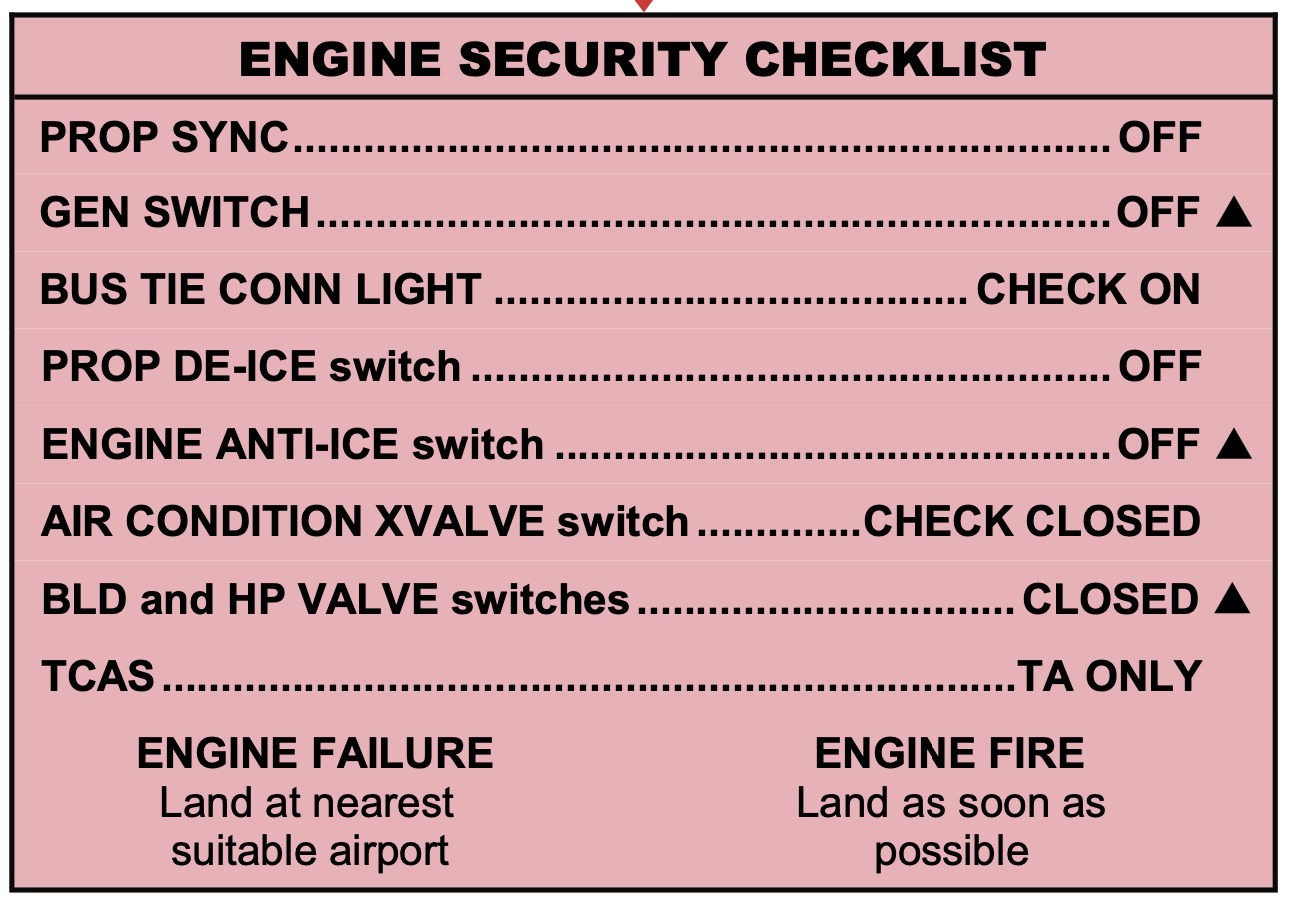
- Performance
- Fuel X Feed
- Weather
- Tracking
- Direct to, intercept track, etc
- Consider holding
- Tracking Considerations
- Can we make it there (fuel check)
- Can we land there (figures - LDF, MAP Climb, ENR Performance)
- Communication
- Continuous power set
After Shutdown CX
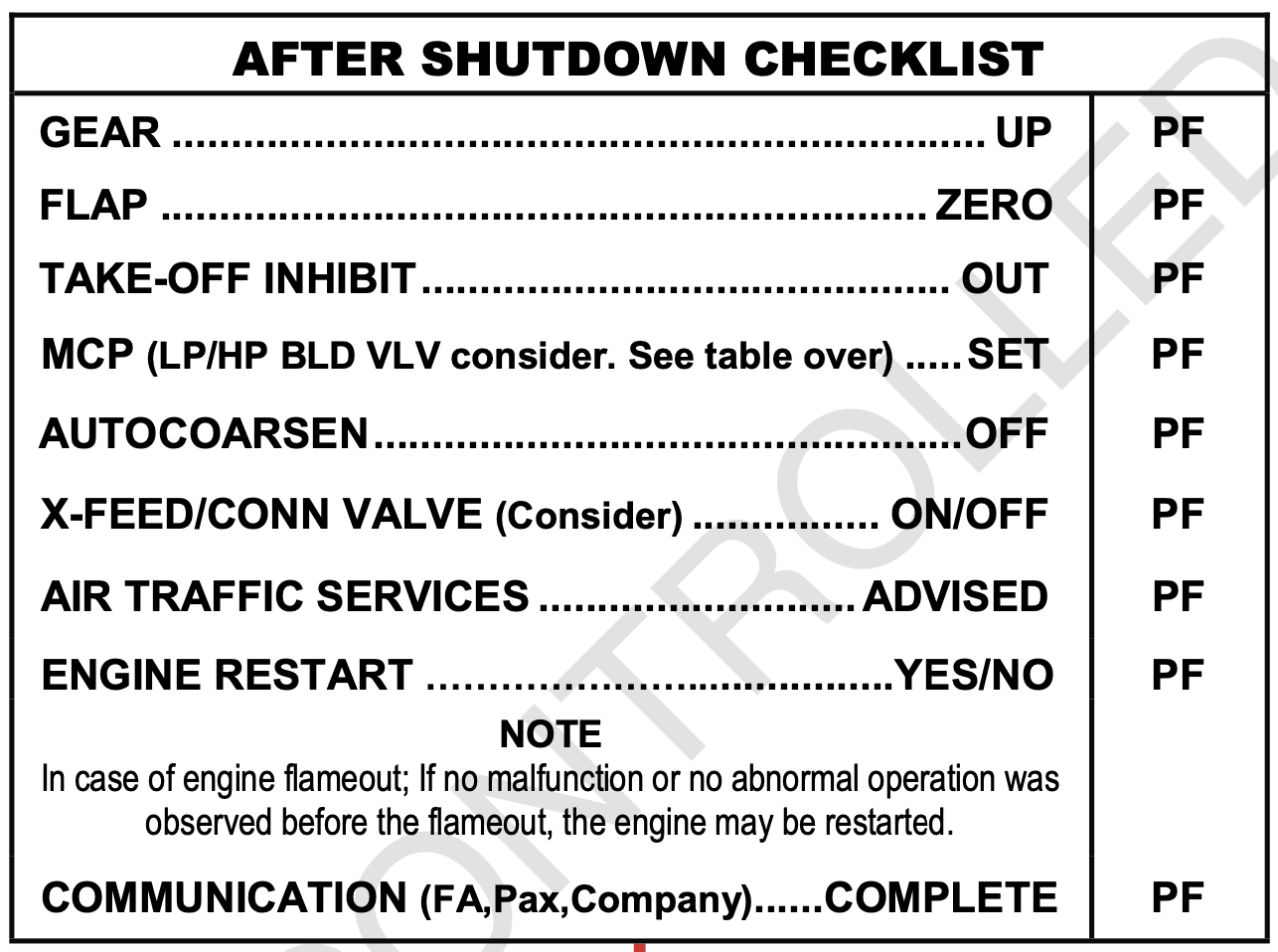
Note - flip cabin secure card when FA comes to FD
FA
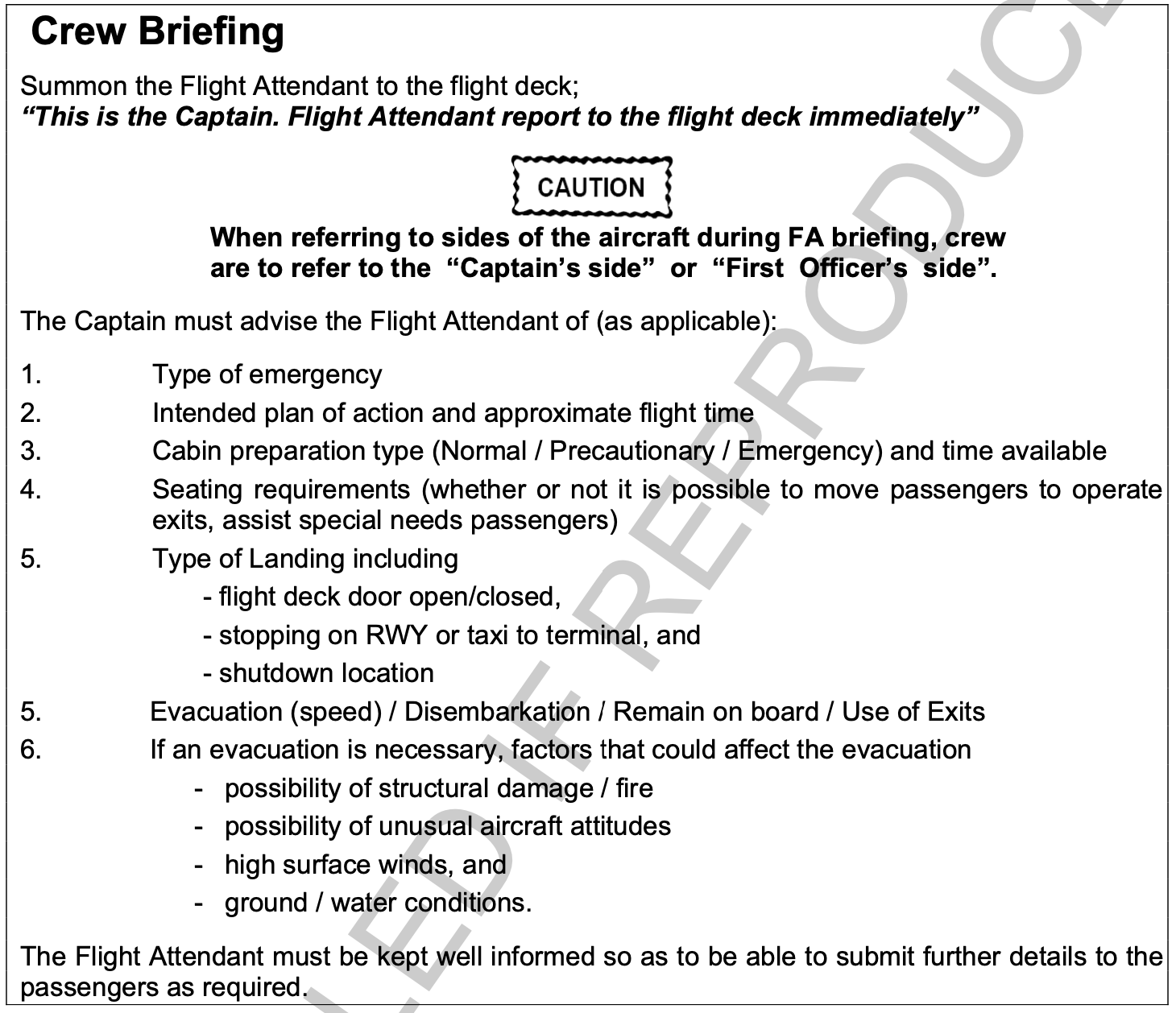
Pax
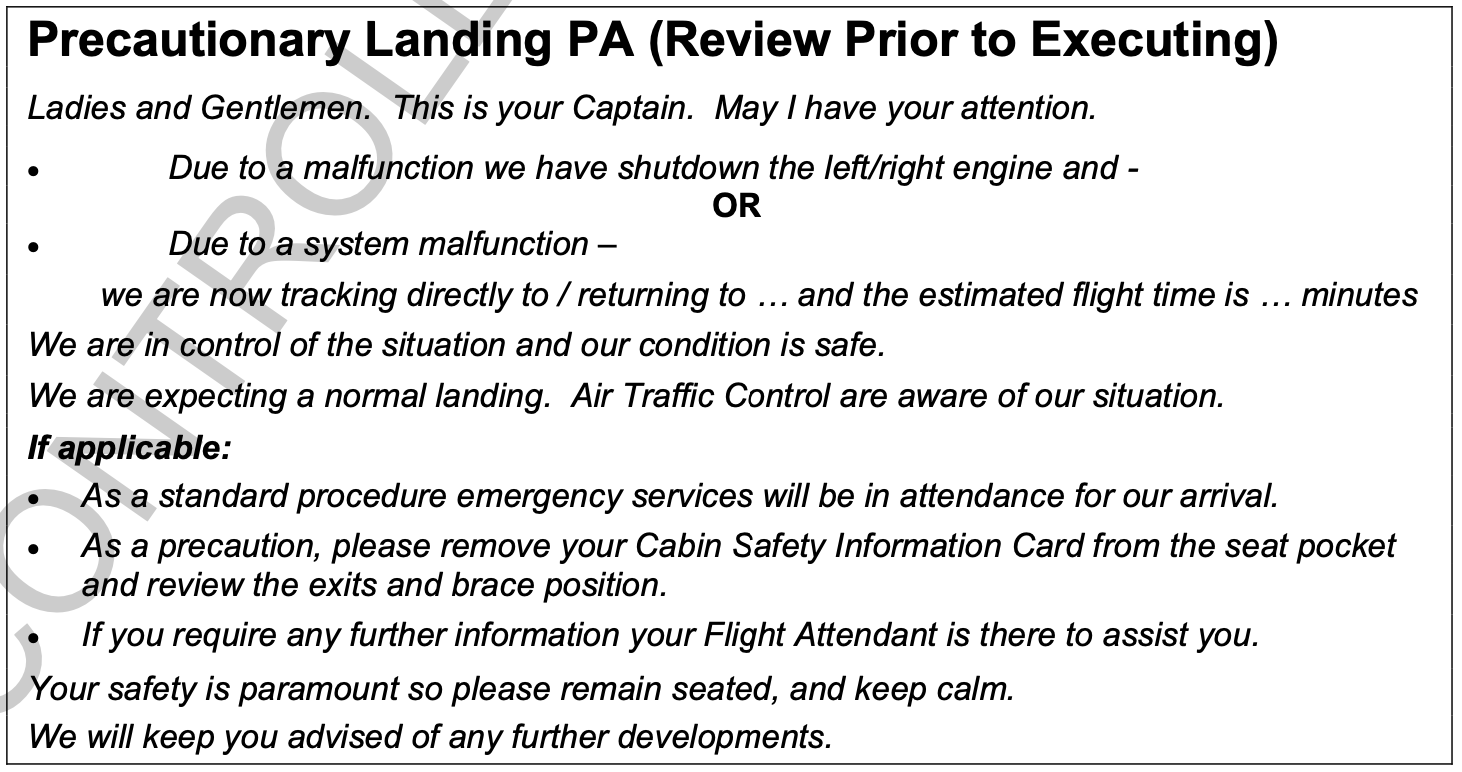
- Performance
- Weather
- AWIS / further updates
- Tracking Considerations - PLS BRACE (sorry)
- Pressurisation panel
- Lights
- Speeds
- BRACED5CLQS
- Scanflows
Descent & Approach CX
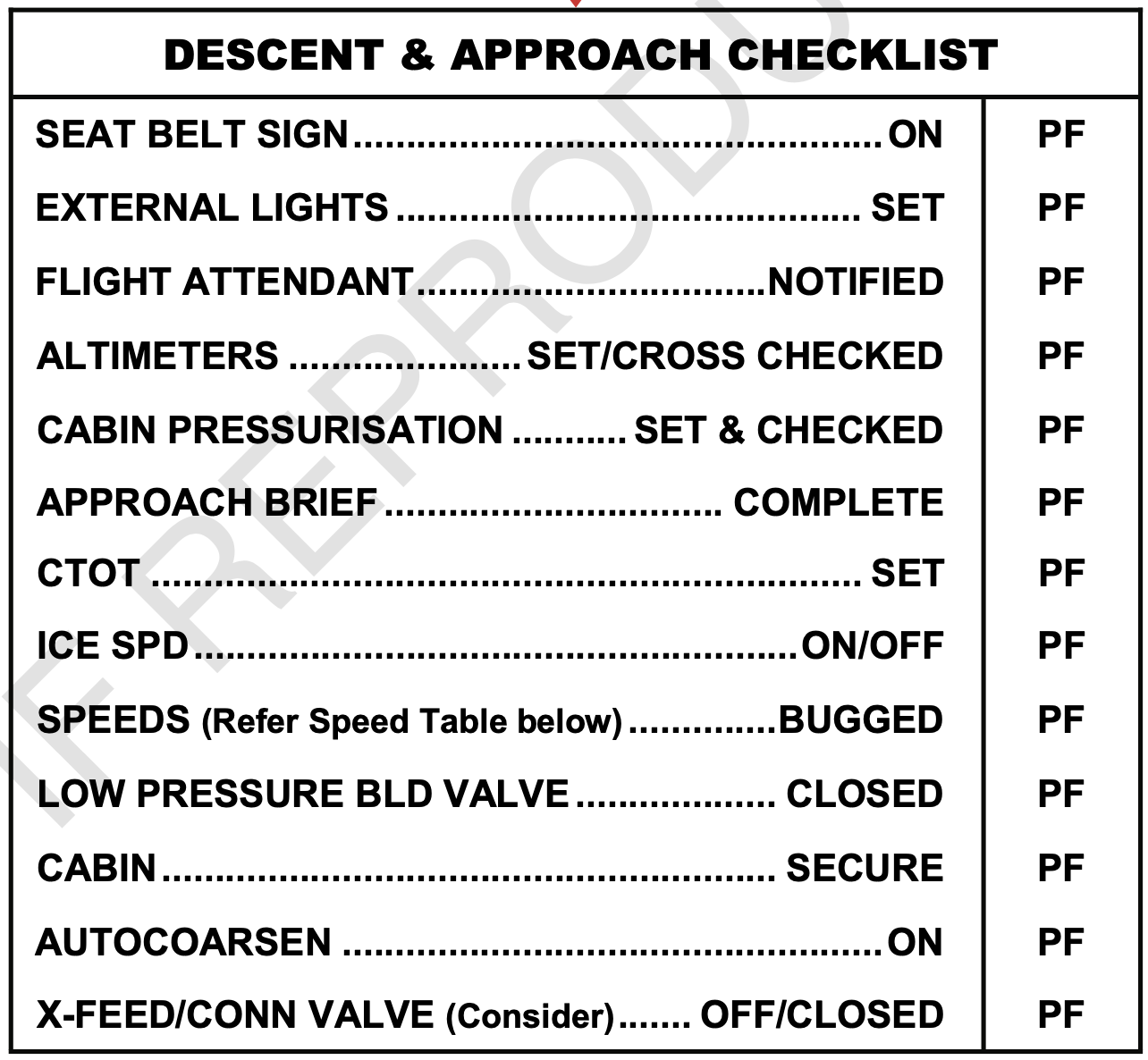
- Course bars / aids
- Cleared for approach
- Speed and configure
Final CX
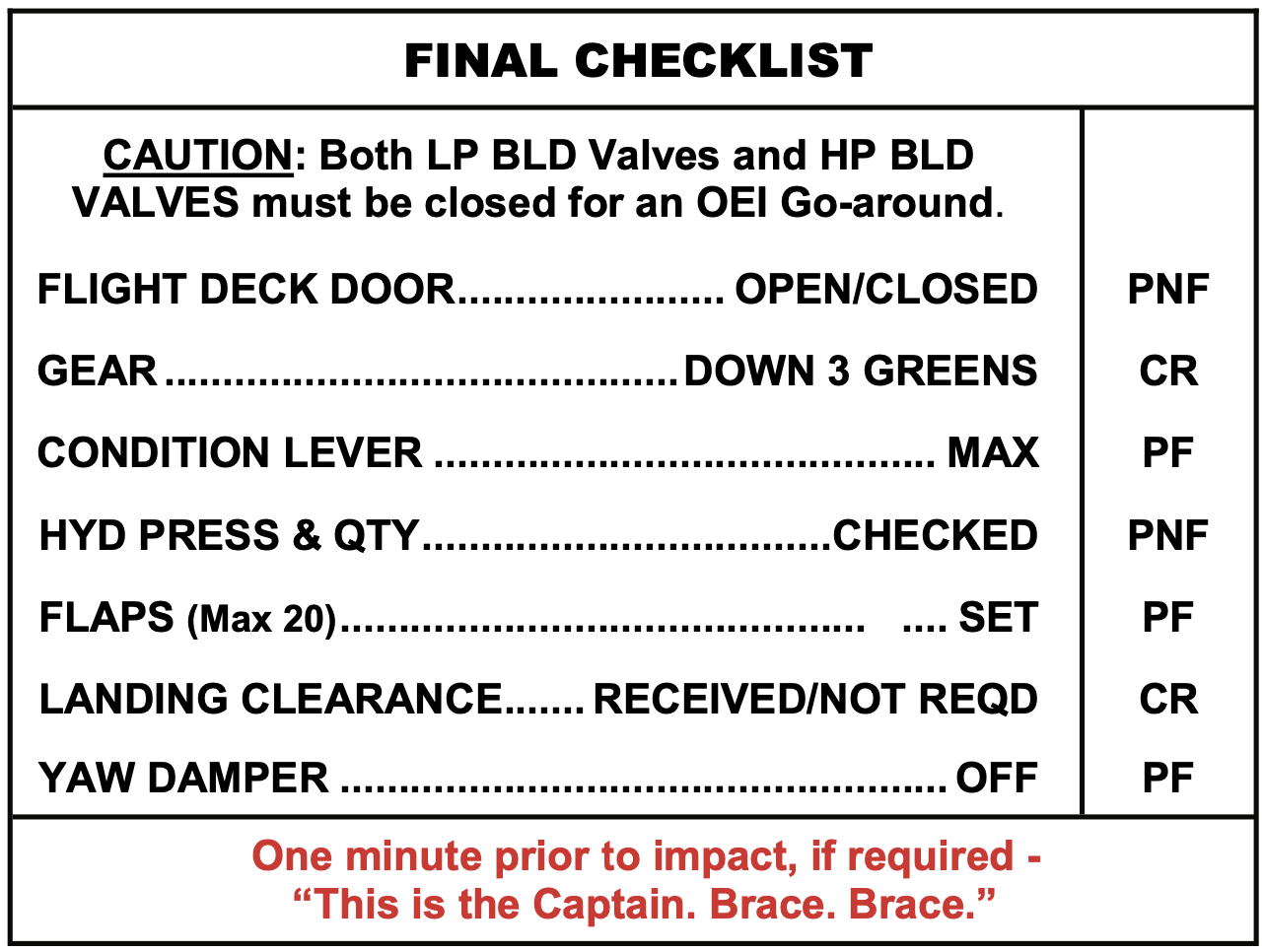
Notes
- Use 70kg positive imbalance for fuel (buffer in case you forget to turn crossfeed off)
- Brief departure alternate if departure AD is unsuitable, and set course above the MSA
- Calculate LDR and approach climb gradient on the ground (in the sim briefing room), so you know if your departure alternate is suitable (means you don’t have to do it airborne)
- Don’t activate ice protection on failed side (EAI / Prop)
- For EAI On take-off, add 10kt to VENR only, not V2
- For circling, ALWAYS ensure you're within 4.2 nm
- As silly as it sounds, if flap 15 EFATO, confirm you're above flap retraction speed before calling flap at ACCEL ALT
Calculating Landing Data After Malfunction
- Calculate Landing Distance Required using the white pages landing distance and multiplying by the landing distance factor provided by the checklist
- Accounts for a wet runway by being factored by 1.67
- If that isn’t sufficient for landing distance available, defactor by 1.67 and refactor by 1.45 for a dry runway
- If that still isn’t sufficient, multiply initial distance by 0.6 to determine the Demonstrated Landing Distance (requires that you declare an emergency, as you are using the absolute minimum distance without any buffers)
- Determine Approach Climb limitations
- Use the normal Approach Climb tables and compare the landing weight with the weight limits for the applicable conditions and climb gradient
- Tables are designed to cater for OEI condition, so no factoring required
- Use 2.5% table for instrument approach, or 2.1% table for visual approach
- Remember to use ECS OFF when calculating CTOT setting or approach climb limitations when OEI (as bleeds will be closed prior to approach)
Determining ‘Suitable’ Aerodrome
- Weather conditions (above minima)
- Landing Distance Required (sufficient)
- Fuel required to get there (onboard)
- Approach climb gradient (sufficient)
- Enroute requirements (high LSALT, restricted airspace, etc)
OEI Circling
When to Descend
A015 AGL - abeam runway
A013 AGL - start of base turn
A010 AGL - 30 degrees into base turn
A009 AGL - halfway through base
A007 AGL - just before wings level on final
Procedure
- On ALTS capture, 90% Tq
- Wind APA up, get CRS bars set runway heading
- At commencement of base turn, set 70%
- At TOD, call gear down, flap 20, set 700fpm
- Maintain 150kt
- Observe flap 7 VMM - 145kts
- Start final checklist asap
- Once on final, reduce to 25% Tq for VFA +10kt
-
Once on speed, increase to 45% Tq to maintain, hold all the way to the flare
-
With AP off, focus on keeping nose down to maintain descent profile
- Barely any flare required, just arrest rate of descent but don’t miss touchdown zone
- On the runway, use brakes first, then slowly reduce power to avoid swing off centreline
- Remember sim makes you look much wider than you are, so don’t rely on the visual sight picture to judge your final turn
General Power Settings and Procedures
OEI RNAV
- Level: 75% clean for 180kt
- IAF: 1000fpm, 50-60%
- IF: 950fpm
- FAF: 850fpm
OEI NDB
- Level: 90% configured, 80% clean
- Before IAF: Condition lever max, flaps 7
- IAF:
IAF, descending to xxxx, set- Timing
- VS as required
- 60-70% Tq for 170kts
- 1 min
- Set course bars onto inbound heading
- Time Limit
- Set HDG bug 90° off until 10° off inbound course
- Aim for 160kts
- Established Inbound:
Established inbound, descending to the minima 1000- VS 1000fpm
- 50% Tq for 160kts
- Minima:
- 90% Tq for 160kts
- Set MAA
- ONCE WITHIN 4.2NM YOU CAN MANOEUVER
- Call for final checklist to gear
Avoid ALTS capture by aiming to be 200ft above reversal altitude when established inbound, allow 1.5 min for turn, not 1 min (as its more than 180°)
OEI ILS
- Level: 90%, 2° up, 170kt
- GS Intercept: 60-70%, -2°, 165kt
- Slowing for FAP: 50%, flap 20, lower nose by 2°
- Flap 20 by FAP
- VFA + 10kt by minima
OEI Circling
- Downwind (flap 7, condition levers max): 90%
- Descent: Gear down, flap 20, 70%, VS 700fpm
- Don’t reduce below Vmm + 10kt in icing
- Once on final: 25% to reduce to VFA + 10kt
- At Final Speed: 45% to maintain
- Get YD back on on final to trim rudder while you make power changes
AEO Hand Flown ILS
- Level segment before GS intercept: 40% power (clean)
- Configure with gear first, then condition levers, just before GS intercept, increase to 47% if required to maintain 170kt
- Right on GS intercept, deploy flap so that you trim down and start descending at the same time (if you drop flap early, you’ll trim down but need to maintain level and it gets messy)
- Reduce to ~ 40% on GS to hold 170kt (not below 160kt until FAP)
- Reduce to 25% to get flap 20, then that power should let speed decay back to VFA + 10kt
Flapless AEO ILS
- 20-25% should maintain 160kt on the glideslope with gear down and condition levers max
OEI Go Around
- Climb at VENR or VENR + 10kt in icing
- Normal go around
- Call for ‘Set max Continuous Power’ instead of ‘Set Climb Power’ at 1000ft AGL
- Call for ‘Emergency Cover Checklist’ (can be done below MSA OEI)
- PNF runs Shutdown Checklist on ECCL (white checklist)