IFR Notes
Visual Approaches
AIP ENR 1.5 - 1.14
- Within 30nm of the AD, above appropriate safe altitude (MSA/LSALT/MDA/DGA step)
- Clear of cloud and 5k vis or AD in sight
- In sight of ground or water
- Able to maintain VFR height requirements
- Clear of cloud and 5k vis or AD in sight
- In sight of ground or water
- Either:
- Within circling area
- Within 5nm (7nm if runway has ILS) aligned with runway centreline and not below ‘on-slope’ on the PAPI/T-VASI
- Within 10nm (14nm for 16L/34L at YSSY) established not below GS with less than full scale azimuth deflection
When cleared a visual approach in CTA, you must maintain your tracking until 5nm from the AD by day or within the circling area by night.
Cruise Levels

Holding Requirements
| Speed | Timing | |
|---|---|---|
| Up to and including FL140 | 230 kts | 1 min |
| Abv 140 and including FL200 | 240 kts | 1.5 min |
| Abv FL200 | 265 kts | 1.5 min |
Wake Turbulence Separation
Will be applied on parallel runways separated by less than 760M, or when operating directly behind (w/i 760M) another aircraft at same level or less than 1,000ft below.
| Leading Category | Arrival / Full Departure | Intermediate Departure | Distance Separation |
|---|---|---|---|
| Super | 3 min | 4 min | 7 NM |
| Heavy | 2 min | 3 min | 5 NM |
Intermediate - applied when the following aircraft departs from a point more than 150M after the take-off commencement point of the preceding aircraft (same or parallel runway)
Airspace Speeds
Category C Handling Speeds
| Condition | Speed |
|---|---|
| Initial & Intermediate Segments | 160-240kt |
| Final Segment | 115-160kt |
| Threshold | 121-140kt |
| Circling | Max 180kt |
| Missed Approach | Max 240kt |
Class D - 200ks at or below 2,500FT AAL within 4NM of the aerodrome
All other airspace speeds are 250kts IAS
Light Signals
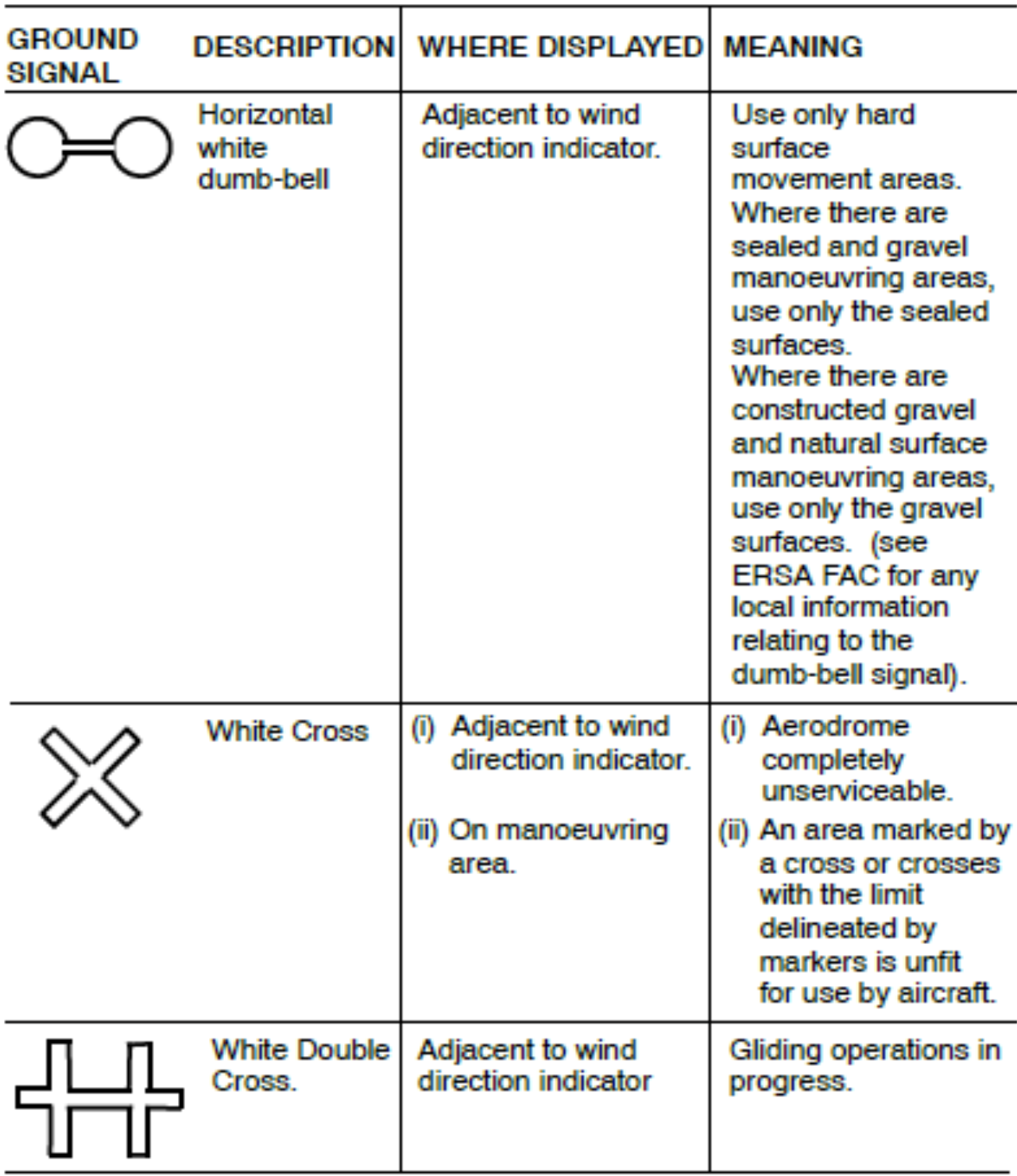
Acknowledgements by Aircraft
In flight:
- Day - rocking wings (not expected on base / final)
- Night - flashing landing lights or twice its navigation lights
On the ground:
- Day - moving ailerons or rudder
- Night - flashing landing lights or twice its navigation lights
Recency Requirements
CASR 61.860
CASR 61.870
CASR 61.875
CASR 61.880
- Can only fly single-pilot IFR if conducted a flight or simulated flight under IFR in a single-pilot operation within the last 6 months
- Duration of at least 1 hour
- At least 1 instrument approach or simulated instrument approach
- Can only fly IFR if conducted at least 3 IAPs in the last 90 days, where at least 1 was done in an aircraft of the category you wish to fly
- Can only fly a 2D/3D/Azimuth/CDI approach if flown at least 1 approach of that type within the last 90 days
- Can only do a 3D IAP if passed the 3D approach endorsement within the past 24 months, or last IPC included a 3D IAP
- Can only fly a circling approach if flight test (if passed within 12 months) or IPC included a circling approach
Aircraft Lighting
CAO 20.18 Appendix V
MOS 121 Ch 11 Division 5
- Instrument lighting with backup power
- Intensity control
- 2 landing lights
- Position and anti-collision lights
- Passenger compartment lights
- Pilot compartment lights
- Emergency lighting including a shock proof torch for each crew member
Apparently only need now:
- anti-collision lights day and night;
- Cabin lighting must enable each occupant to see and use their seatbelt and oxygen facilities (if any).
Lighting
Jeppesen AU-301
Jeppesen AU-302
Jeppesen AU-304/305
For RPT operations at night, an AD must have:
- Runway edge lighting
- Threshold lighting
- Windsock lighting (if U/S, AWIS or approved observer required)
- Obstacle lighting
- Taxiway lighting
- Apron floodlighting
If runway lighting is partially U/S (half lights are out), you must multiply IAP visibility minima by 1.5
Check PPM for lighting alternate requirements
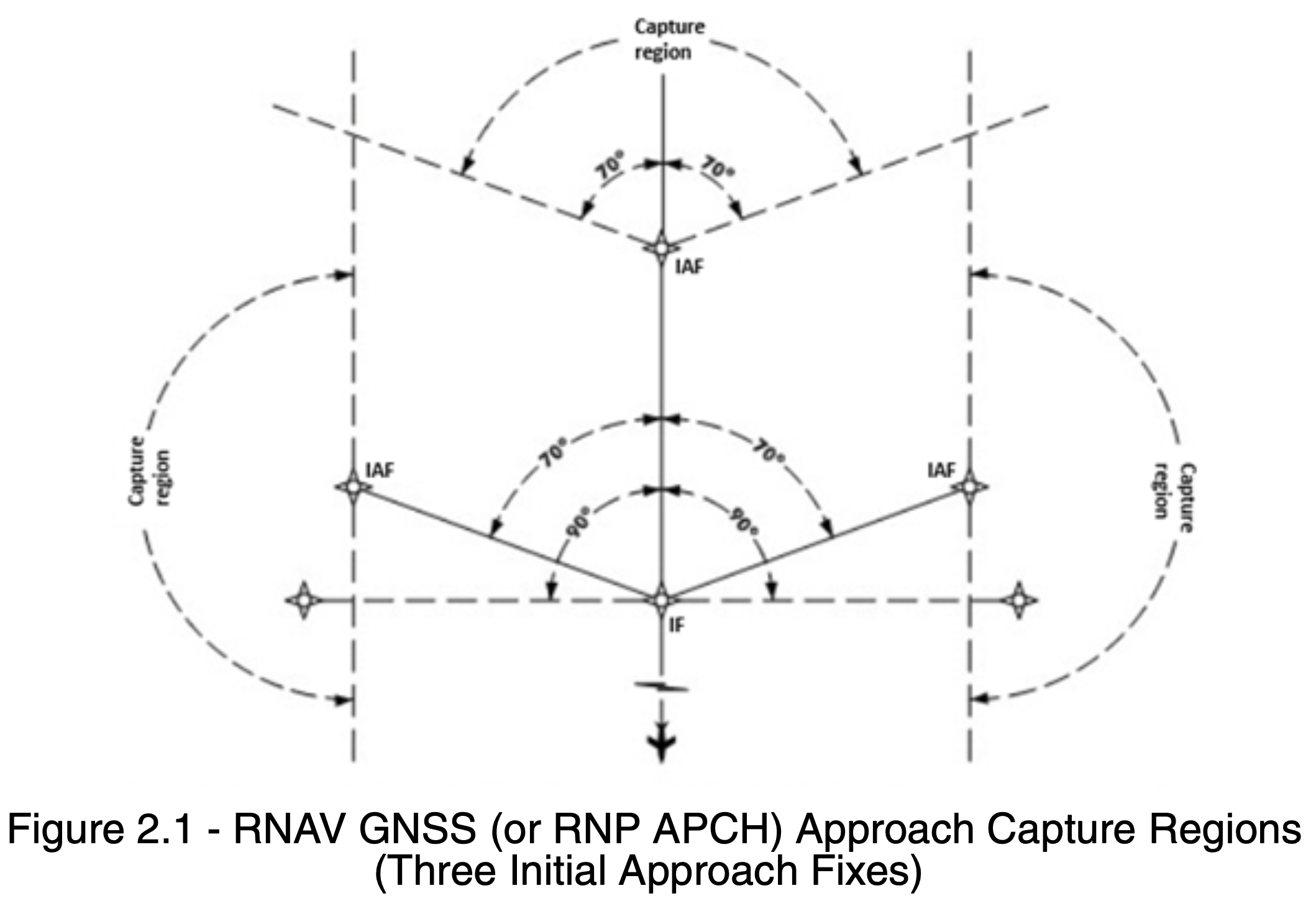
Capture Regions
AIP ENR 1.5 - 2.5
VOR/NDB - 30° either side of outbound track (extended to include reciprocal of inbound track)
Holding Patterns - Must choose the sector entry that current heading ±5° fits in

Operations below Minimas
AIP ENR 1.5
Descent below LSALT/MSA
- Being radar vectored
- On an instrument approach/DGA
- Established in the published hold
- On climb after take-off
- By Day VMC
- Within 3nm of AD by night with runway lights in sight
Descent below Straight-In MDA
- Visual reference can be maintained
- The minima requirements are met
- The aircraft is always in a position where it could land straight in using normal rates of descent
Missed Approaches
AIP ENR 1.5 - 1.9
- Out of tolerance after FAF
- Aid fails or becomes unreliable below MSA
- Visual reference to the runway environment (threshold, approach lights, any other markings) is not gained by MAP/DA
- After a runway approach you are unable to land straight in and require a circle to land, but the weather conditions are below the circling minima
- Visual reference is lost during circle to land
- On an approach requiring GNSS, you receive a RAIM Loss or RAIM Warning after passing the IAF
Missed approaches provide minimum obstacle clearance of 100ft along a gradient of 2.5%.
If RAIM Loss:
- Missed approach must be conducted if RAIM lost or RAIM warning received
- GPS may be used for tracking provided RAIM warning ceases, otherwise must DR (or alternative means)
Operations without RAIM
- Use other nav systems to monitor tracking
- Advise ATC if in CTA:
- RAIM lost for more than 5 min
- RAIM not available when ATC requests GPS distance or GPS distance limit imposed
- GPS is in DR mode for more than 1min
- CDI exceeds 2nm off track
Circling Approaches
You can only descend below MDA during a circling approach when:
- Within the circling area
- Visual with the runway environment
- Assured of the required in-flight visibility
- By day: descend not below the minimum obstacle clearance altitude until aligned with the landing runway
- By day or night: execute a continuous descent to the runway and descend not below the minimum obstacle clearance altitude until aligned with the landing runway
CAT C Circling Area Dimension: 4.2nm
CAT C Minimum Obstacle Clearance Altitude 400ft agl
IFR Equipment
Part 121 - Ch 11 Division 3
- ASI (with way of preventing malfunction due to icing)
- 2 altimeters
- Compass
- Timepiece
- VSI
- OAT
- 2AHs
- Heading indicator
- Turn & slip indicator
- Way of indicating if power to instruments has been lost
- Alternate static source
- Duplicated power supply for AH, heading indicator and turn & slip indicator IFR aircraft also require:
- RPT/CHTR: 1 GNSS receiver and 1 ADF/VOR or 2 TSO-145/146 GNSS
IFR aircraft must also have a VHF radio on board, plus an HF radio if outside VHF range.
Autopilots
CAO 20.18.4
IFR CHTR, RPT and air ambulance must have autopilot with:
- Heading and altitude hold
- Able to manoeuvre aircraft around roll and pitch axes
Aircraft requiring autopilot can operate without one if:
- Equipped with dual controls
- Crewed by 2 pilots authorised to conduct the flight
Weather Radars
Jeppesen ATC AU-511
IFR RPT and CHTR crewed by 2 or more pilots must have a serviceable weather radar. If radar required but U/S, you can’t depart if forecast shows probability of TS or clouds with severe turbulence. If radar fails enroute, you can continue provided you avoid penetration of clouds likely to have severe turbulence.
Assigned Altitude Indicator and Alerting System
CAO 20.18.7
All pressurised turbine aircraft in CTA operating IFR must have an altitude alerting system. All IFR aircraft operating in CTA must have an assigned altitude indicator.